
“Three months in, Smart Pass Rewards is already gathering real momentum. Value per view grew by 77% as we entered month four, and customers are continuing to come back. It’s been an exciting partnership for Tyviso, helping Ocado add even more value to Smart Pass, and we’re only getting started..”

A unified commerce platform gives eCommerce brands one integration and one set of controls, and the flexibility to use the right incentive at the right moment across the Commerce Journey. It means having the ability to choose when a Gift With Purchase, Gift After Purchase or Rewards experience will add value without making the brand feel overly promotional.
Baymard's long-running checkout research puts the average online cart abandonment rate at around 70%, meaning many retailers still lose a significant share of shoppers at the final hurdle. Meanwhile, brands face growing pressure to retain the customers they already have, because acquisition costs remain high and performance marketing efficiency is harder to sustain.
Many retailers respond by adding tools one problem at a time. One tool for Gift With Purchase to improve optimisation, or another for post-purchase monetisation. Loyalty Rewards programmes are often accessed using a separate platform. That approach solves the immediate problem while creating a fragmented commerce stack.
This article explains what unified commerce really means, why point solutions create hidden costs, how gifts and rewards work across the Commerce Journey, and how eCommerce leaders should evaluate a unified platform.
What is unified commerce?
Unified commerce is a connected approach to managing customer touchpoints, incentives, reporting, and operational controls through a single integrated system.
For eCommerce retailers, a unified commerce platform is a framework for managing value across the Commerce Journey. That includes the moments before checkout, post-purchase and between purchases.
In practical terms, unified commerce brings together:
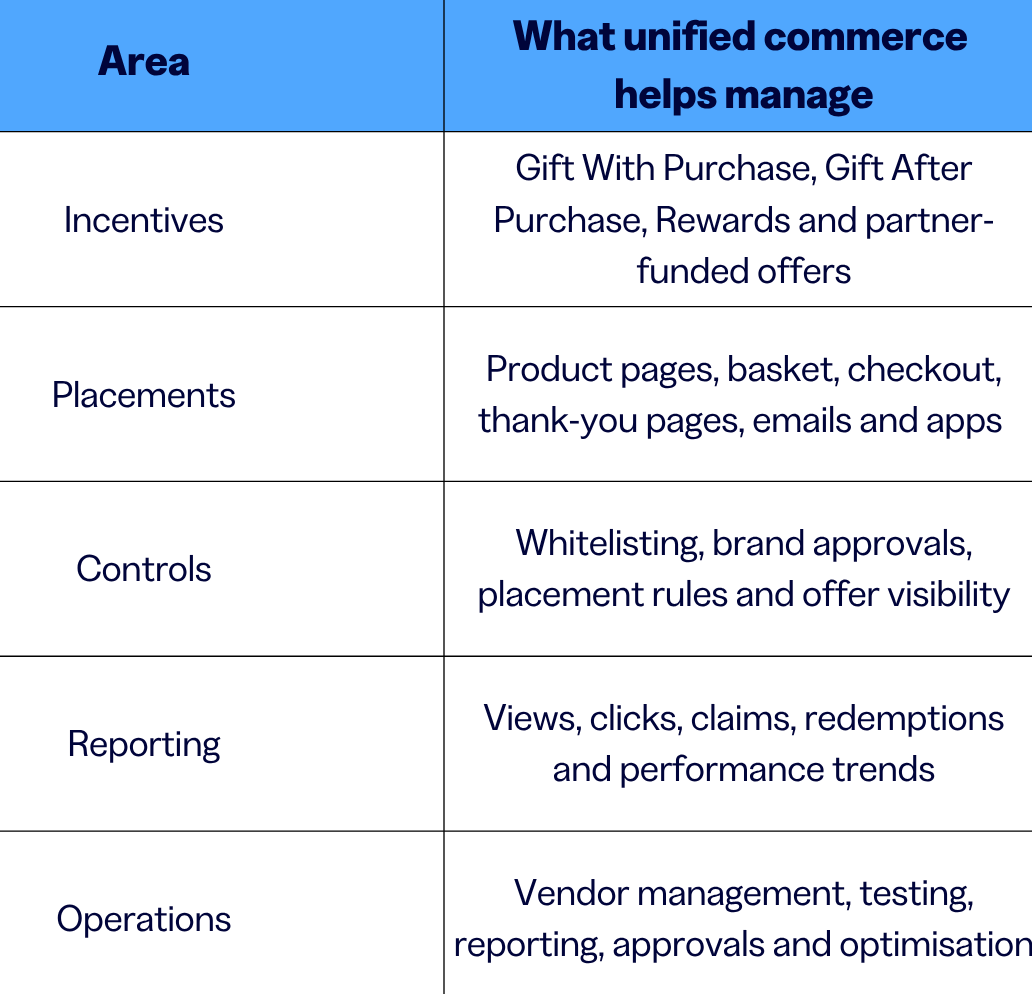
A unified commerce platform helps the brand manage customer value across the Commerce Journey.
The Unified Commerce Strategy for Optimisation, Monetisation and Loyalty
For eCommerce brands, a unified commerce strategy means managing incentives, rewards, partner offers, reporting, and customer value moments from a single connected platform.
The useful framing is the Commerce Journey.
The Commerce Journey looks beyond the traditional customer journey and focuses on the commercial moments where a brand can create, protect or extend value.
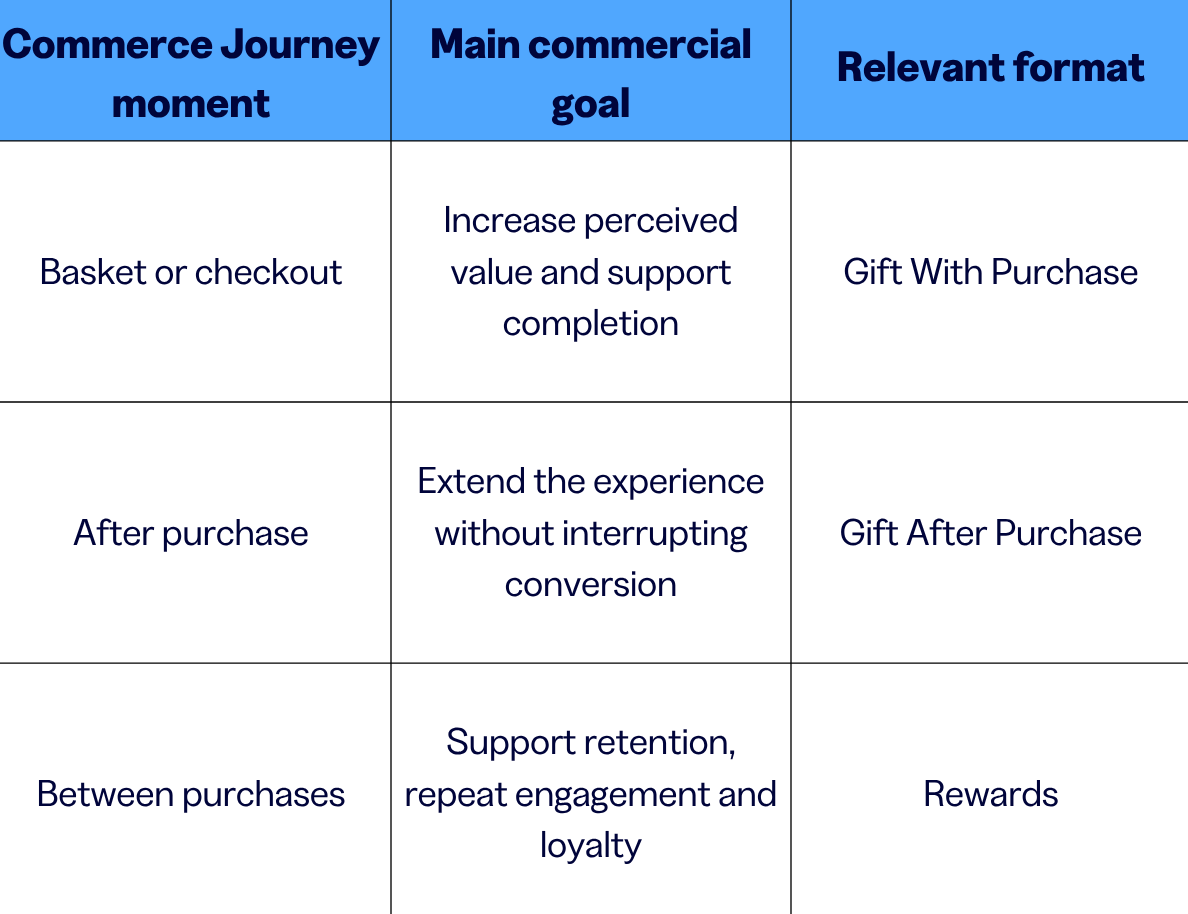
Before checkout, the focus is on conversion and basket value. At the basket or checkout stage, the right Gift With Purchase increases perceived value and helps customers complete the purchase. After purchase, Gift After Purchase enhances the customer experience because the customer has already made a purchase. Between purchases, Rewards rises when a brand wants to manage multiple value moments across the Commerce Journey.
The goal is choosing the right tool for the right moment, rather than overloading every stage.
The hidden costs of a fragmented eCommerce stack
The cost of multiple tools extends well beyond licence fees. The higher costs are typically operational.
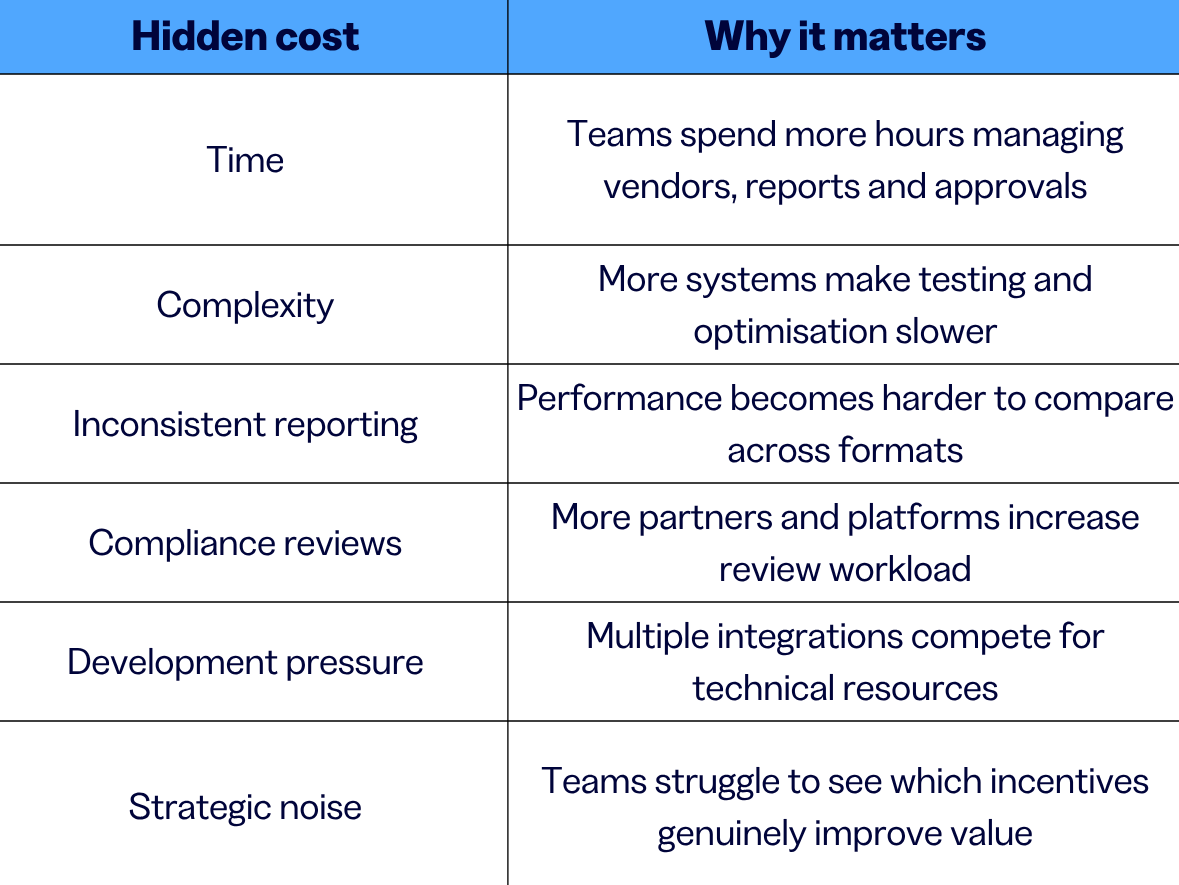
A specialist tool can be useful when a brand has a narrow, isolated problem. The issue appears when a brand wants to manage several value moments across the Commerce Journey through disconnected systems. The more fragmented the stack becomes, the harder it is for teams to learn what genuinely improves conversion, LTV, retention and customer satisfaction.
Enhance Your Commerce Journey With One Unified Platform
Deploying Gift With Purchase, Gift After Purchase, and Rewards simultaneously can create friction if the customer encounters too many incentives in a short period. When both pre-checkout and post-checkout incentives are active without a clear strategy, the experience can feel cluttered or overly promotional.
A strong unified commerce strategy gives brands control over those choices.
Most brands will typically choose one checkout-related format, such as Gift With Purchase or Gift After Purchase, alongside Rewards. That combination supports conversion or post-purchase value while maintaining a retention layer between purchases.
Tyviso's strength is that a single integration can support Gift With Purchase, Gift After Purchase, and Rewards. The value is flexibility, rather than forced activation.
Gift With Purchase: rewarding customers at the moment of sale
Gift With Purchase is a pre-checkout or basket-stage incentive. It gives the customer an added-value reward at the point of decision. That gift increases perceived value, supports basket completion and helps customers feel they are getting more from the purchase without the retailer reducing the price of the core product.
This works best when the gift feels relevant to the customer, is curated rather than generic, is aligned with the basket or product category, is easy to claim, and is applied with care, because too many messages, too many choices,made a purchase
The pre-checkout experience should stay focused on conversion. Gift With Purchase works best when it is applied with care, because too many messages, too many choices or irrelevant offers can distract from the purchase itself.
Gift After Purchase: extending the experience beyond checkout
Gift After Purchase is a post-purchase format. It appears after the transaction is complete.
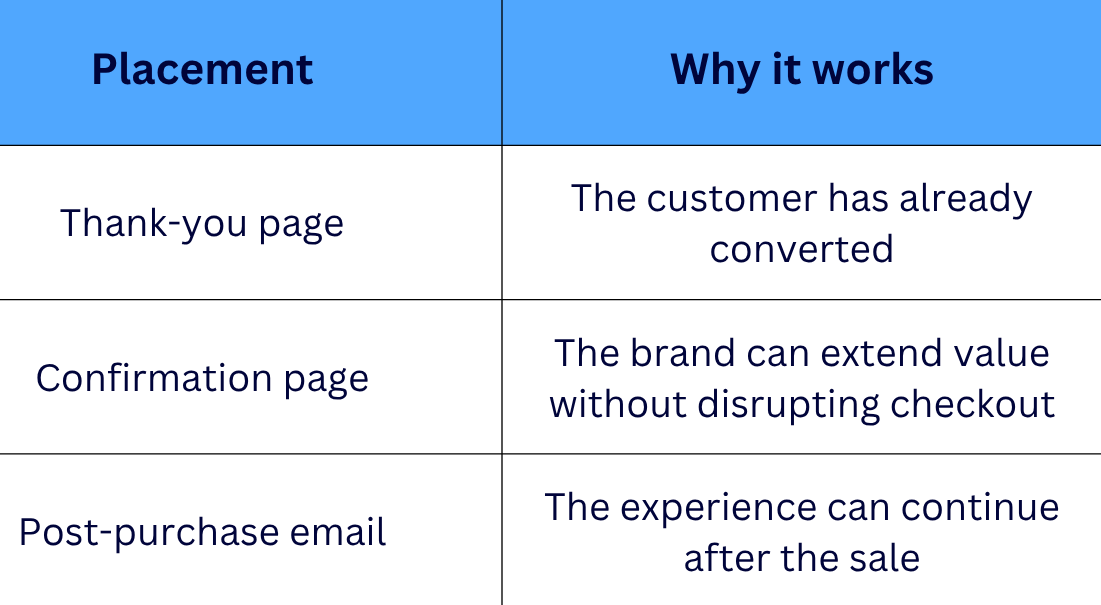
The key benefit is that Gift After Purchase leaves the checkout process undisturbed. The customer has already made a purchase, so the brand can create an added-value moment without putting the transaction at risk.
This is especially useful for eCommerce brands that want to monetise the post-purchase moment. The thank-you page, confirmation page and post-purchase email are often underused. A relevant post-purchase reward can create incremental value from a moment the brand already owns.
Gift After Purchase can also support customer satisfaction. A customer who has just made a purchase is often highly engaged, and a well-timed reward can make the purchase feel more valuable and strengthen their perception of the brand.
Strategic restraint still matters here. A brand that already uses a strong Gift With Purchase at checkout should think carefully before adding another incentive immediately after purchase. The right answer depends on the category, margin, basket size, purchase frequency and customer expectation.
Rewards and loyalty programmes: turning one-time buyers into repeat customers
Rewards keep the relationship active between purchases.
A good eCommerce rewards programme gives customers useful, relevant value while keeping the brand front of mind. That could include partner-funded offers, exclusive savings, member benefits, practical perks, or curated rewards that align with customer interests.
Rewards are especially useful for brands looking to improve retention, repeat engagement, app or account usage, perceived value, customer lifetime value and loyalty programme eCommerce performance.
Tyviso's Rewards product focuses on personalised, partner-funded gifts designed to strengthen loyalty, reduce churn and raise lifetime value, with built-in A/B testing and real-time reporting.
The commercial logic is visible in Tyviso's case studies. EE launched an in-app rewards programme with Tyviso in June 2024 and reported that customers exposed to EE Rewards were 34.5% less likely to leave than those who had no exposure. The programme also served 15 million offers and achieved 90% repeat engagement within the first six months. Plusnet used Tyviso's Rewards platform for its My Perks experience and reported that visitors to the page were 90% more likely to complete an upgrade and 5% less likely to churn than non-visitors.
Rewards work best when they are integrated into the broader Commerce Journey rather than kept in a separate system. That connection gives teams a clearer view of how customer value is created before, during and after purchase.
Why Use One Platform for Gift With Purchase, Gift After Purchase and Rewards
When Rewards are managed through the same platform as Gift With Purchase and Gift After Purchase, the brand can make better decisions about customer value across the whole Commerce Journey.
A unified rewards platform gives eCommerce teams a clearer way to answer important questions:
- Which incentives help customers complete their purchase?
- Which post-purchase offers create incremental value?
- Which Rewards drive repeat engagement?
- Which partners should be approved across several formats?
- Which placements work best for different customer moments?
- Where are customers engaging, claiming and redeeming?
A fragmented stack makes these questions harder to answer. A unified commerce platform makes them easier to manage.
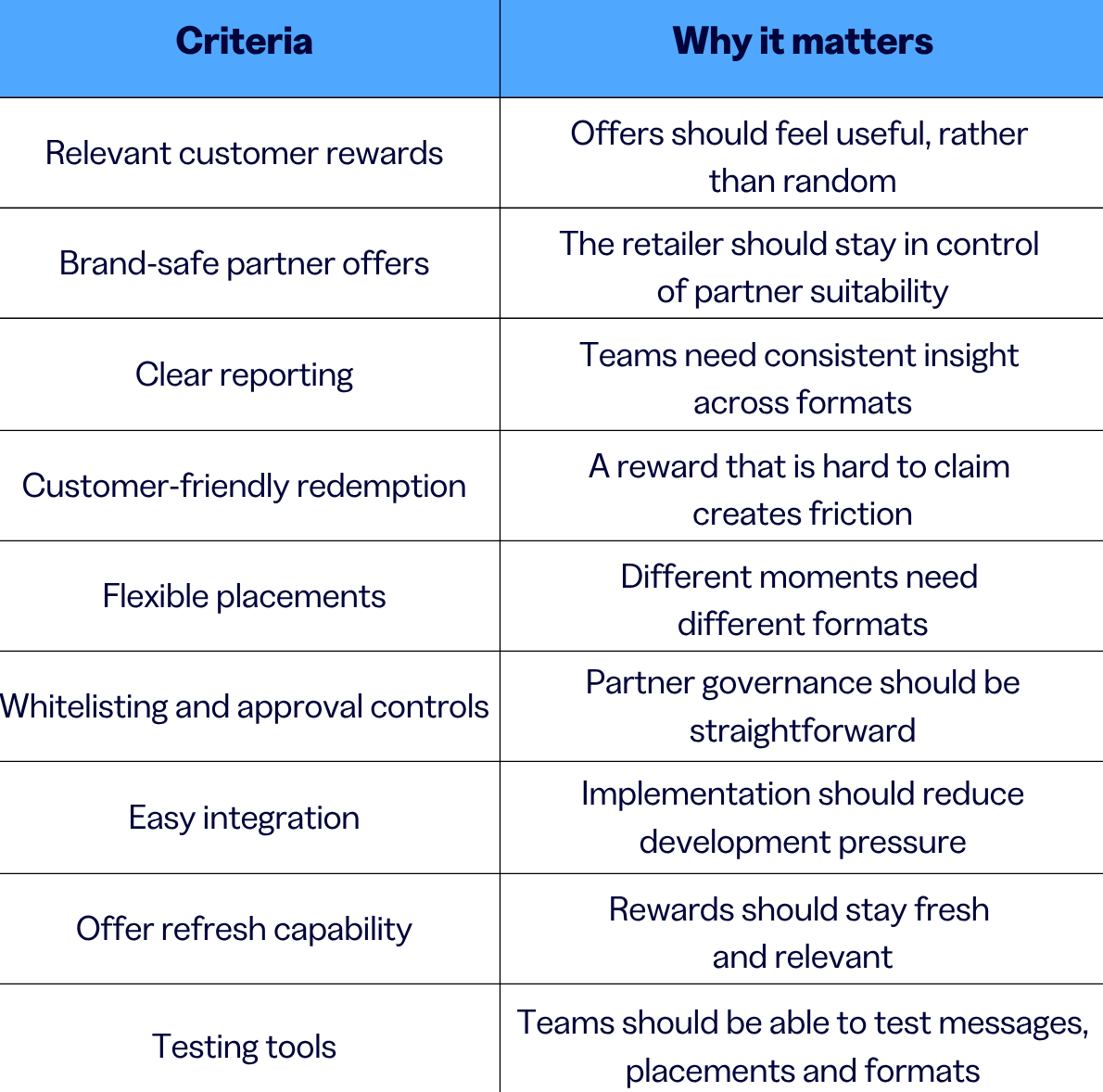
What to Look for in a Commerce Platform Provider
The best commerce platform provider helps the brand control the experience, learn from performance and reduce operational complexity.
Tyviso's success stories consistently show the role of testing, placement and optimisation. The Nursery Store used Tyviso's Gift With Purchase platform with a customised three-brand basket widget and reported that 25% of shoppers selected a gift during checkout. When a gift was selected, basket completion rose 46% and those users spent 17.2% more.
How a Unified Commerce Platform Reduces Friction for Your Team
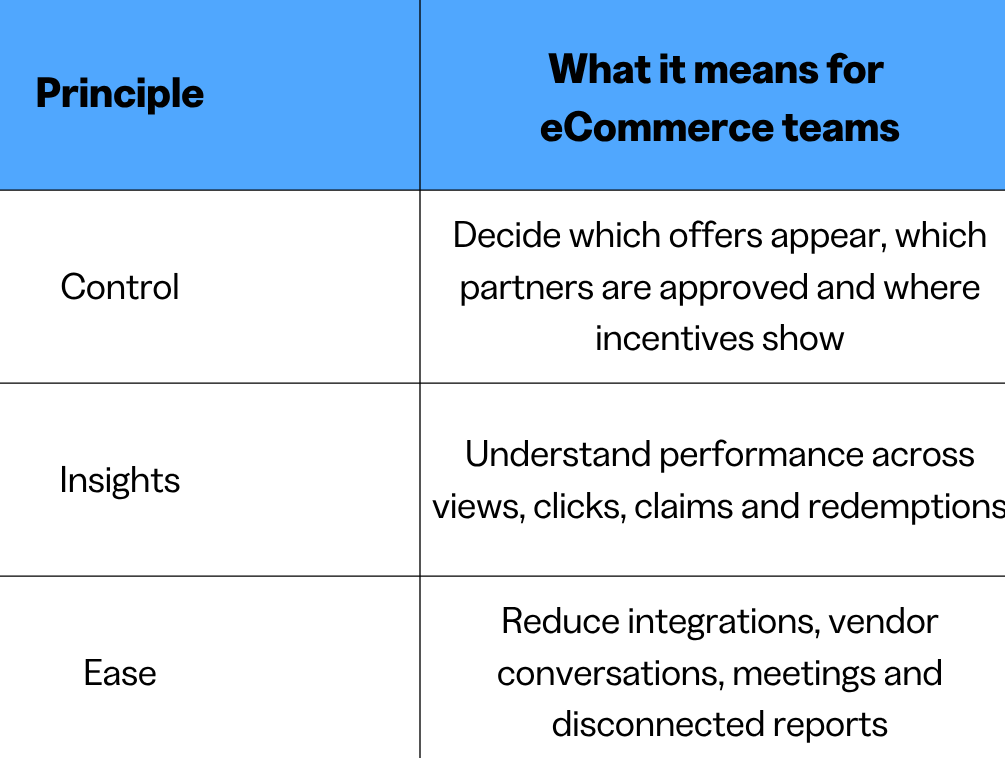
The operational advantage of a unified commerce platform comes down to three principles: Control, Insights and Ease.
Control
The brand controls which offers appear, which advertisers are approved, where offers show and how the experience fits the brand environment.
This is essential for senior eCommerce and CRM teams. Incentives should support the brand rather than dilute it. A premium retailer may need a different partner mix from a value-led retailer. A baby products retailer may need a different reward environment from a telecoms brand. A unified platform makes it easier to manage those rules in one place.
Insights
The platform provides insight into behaviour across the Commerce Journey, covering who viewed, clicked, claimed and redeemed offers.
The value is in actionable insight rather than raw data volume. A consistent dataset helps teams understand which placements, offers, partners and messages are working. That insight supports better decisions and helps teams test, optimise and improve the experience with confidence.
Ease
One integration reduces internal complexity. It means fewer vendor relationships, fewer reporting structures, fewer approval processes and fewer commercial conversations. It gives teams one place to manage offer controls and whitelisting across multiple formats.
That matters because eCommerce teams are already under significant pressure. A platform should create less operational drag than the value it delivers.
Tyviso: one platform for gifts, rewards and commerce media
Tyviso helps eCommerce brands create value across the Commerce Journey through Gift With Purchase, Gift After Purchase, and Rewards, all within a single integration. The platform is designed around control, insights and ease: control over the experience, insight into performance and an easier operating model for teams managing multiple customer value moments.
The advantage of a unified platform is flexibility. Brands can choose the right incentive for the right moment without building a fragmented stack around every new use case.
To explore how a unified incentive strategy could work for your brand, speak to Tyviso about your Commerce Journey and the value moments you want to improve.
FAQ
What is a unified commerce platform?
A unified commerce platform connects customer touchpoints, incentive formats, reporting, and operational controls into a single integrated system. For eCommerce brands, it can help manage Gift With Purchase, Gift After Purchase, Rewards, partner offers and performance insight across the Commerce Journey.
What is the difference between unified commerce and omnichannel?
Omnichannel means a brand can operate across several channels, such as website, app, email, store or marketplace. Unified commerce goes further by connecting the systems, controls, data and reporting behind those channels. Omnichannel is about presence. Unified commerce is about connected management.
Can Gift With Purchase and Gift After Purchase be used together?
They can be used together, though they work best when each has a clear and distinct role. Gift With Purchase supports conversion before the transaction is complete. Gift After Purchase extends the value post-transaction. Using both in close succession works well when there is a clear strategy, strong segmentation and careful placement.
Why should all Commerce Media sit on the same platform?
Commerce Media works best when brands can control partner approvals, placements, reporting and offer visibility consistently. Keeping Commerce Media on the same platform as gifts and rewards helps teams understand performance across the Commerce Journey and maintain clear vendor management.
What does single Commerce Media integration mean in eCommerce?
A single Commerce Media integration means a single connected technical setup that can support multiple partner-funded value moments, such as Gift With Purchase, Gift After Purchase, and Rewards. It reduces duplicated development work, simplifies whitelisting and gives teams a more consistent view of performance.
How can brands avoid overwhelming customers with too many offers?
Brands should match each incentive to a clear Commerce Journey role. Use Gift With Purchase when the goal is to support basket completion. Use Gift After Purchase when the goal is to extend the post-purchase experience and monetise. Use Rewards when the goal is retention and repeat engagement. Most brands will find the best results by choosing one checkout-related format alongside Rewards, rather than activating every format at once.
Transcript
“Three months in, Smart Pass Rewards is already gathering real momentum. Value per view grew by 77% as we entered month four, and customers are continuing to come back. It’s been an exciting partnership for Tyviso, helping Ocado add even more value to Smart Pass, and we’re only getting started..”